Ott 21, 2024 | Research Team
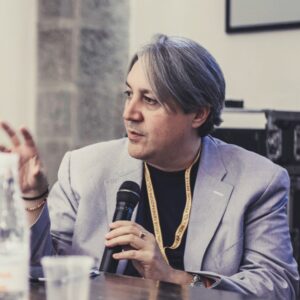 Giovanni Boccia Artieri (Ph.D.) is Full Professor in Sociology of Communication and Digital Media and Dean at the Dept. of Communication Sciences, Humanities and International Studies, University of Urbino Carlo Bo. His main research interests revolve around media theory, with a focus on social media and participatory culture. Current research projects include mediatization processes; fringe platforms; online hate speech studies; media manipulation and disinformation.
He has published many articles in national and international Journals such as Information, Communication & Society, Current Sociology, International Journal of Communication, Participations. Journal of Audience & Reception Studies. Updated publication list and profile is available here.
Ott 20, 2024 | Research Team
Sara Bentivegna is 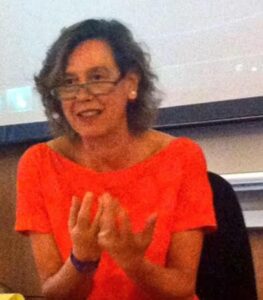 Full Professor of Political Communication at the Department of Communication and Social Research (Coris), University of Rome “Sapienza”.
Her scientific and research activities have been devoted to (both traditional and digital) communication and its impact from a multidimensional perspective.
Given the pivotal role of the web in politics, she has focused her attention on the many transformations of political and participatory processes, namely engagement in public conversations, in contemporary societies.
Ott 19, 2024 | Research Team
 Rossella Rega is Associate Professor of Sociology of Cultural and Communication Processes at the Department of Social, Political and Cognitive Sciences, University of Siena, where she teaches “Media Industry and Strategic Communication” and “Journalism and New Media”. She is a member of the PhD board in Communication, Social Research and Marketing at Sapienza University of Rome.
Her research interests focus on political incivility, journalism and new media, the public sphere, and political communication. She is currently involved in research projects concerning the perception of political incivility by citizens, journalists and politicians, and political radicalization content between fringe and mainstream platforms. Her recent publications include “(Un)civil Democracy. Political Incivility as a Communication Strategy” (with S. Bentivegna, Palgrave Macmillan, 2024), and numerous articles in international journals such as “Social Media + Society”, “European Journal of Communication”, “Contemporary Italian Politics” and “The Communication Review”.
Link a Google Scholar https://scholar.google.it/citations?hl=it&user=RKoG86oAAAAJ&view_op=list_works&sortby=pubdate
Ott 18, 2024 | Research Team
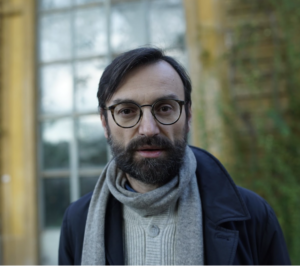 Tiziano Bonini is Associate Professor of Sociology of Culture and Communication at the University of Siena, where he teaches Media, Digital Culture and Society at the undergraduate level and Sociology of Digital Media at the graduate level. He is co-author of Algorithms of Resistance (MIT Press 2024) and his research interests focus on critical algorithm studies and platform studies with a specific emphasis on the gig economy and cultural industries.
Link a Google Scholar https://scholar.google.com/citations?user=wgrZj7MAAAAJ&hl=it
Ott 17, 2024 | Research Team
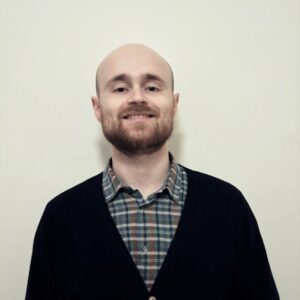 Stefano Brilli is a Research Fellow at the Department of Communication Sciences, Humanities and International Studies of the University of Urbino (Italy). His research interests focus on irreverence and celebrity in digital culture, performing arts audiences and the sociology of the arts. He has recently published: YouTube Freak Show: Fama e derisione alle soglie dell’influencer culture (2023) and Gradienti di liveness: Performance e comunicazione dal vivo nei contesti mediatizzati (with Laura Gemini, 2023).
Ott 16, 2024 | Research Team
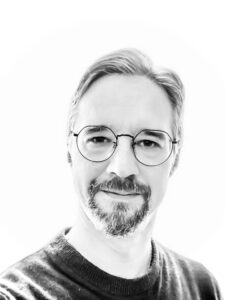 Nicola Righetti is Assistant Professor at the University of Urbino Carlo Bo, Italy, where I teach Digital Methods. Previously, I worked as a researcher at the University of Vienna, Austria, where I taught Advanced Data Analysis and served as an associate researcher at the Computational Communication Science Lab. My work primarily focuses on studying significant political and social phenomena using digital and computational methods, as well as traditional social science approaches.

Commenti recenti