
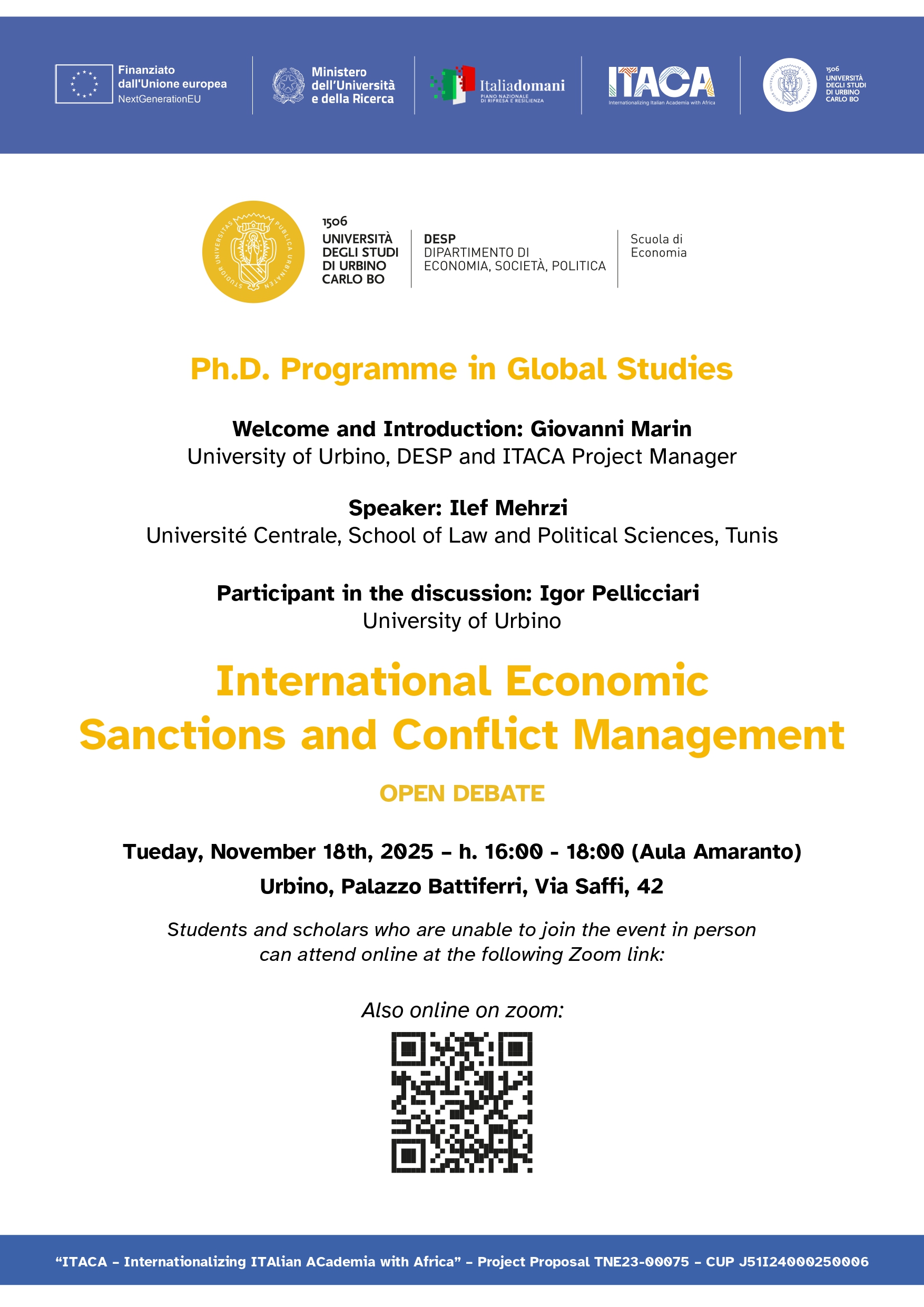
This presentation explores the interplay between international sanctions and mediation as complementary tools for managing armed conflicts, with a focus on the Yugoslav Wars (1991–1996). It examines the legal foundations of peaceful dispute settlement under the UN Charter and the evolving role of sanctions in international relations. While sanctions are often perceived as coercive measures, this analysis highlights their potential to create conditions conducive to negotiation by exerting economic and diplomatic pressure on belligerents. Through historical and legal insights, the discussion traces how sanctions, combined with mediation efforts by the European Community, the United Nations, and the Contact Group, shaped the dynamics of conflict resolution in the Balkans. The case demonstrates that sanctions can reinforce diplomatic initiatives when integrated into a coherent strategy, provided timing, consent, and mediator credibility align. Lessons drawn underscore the importance of coordination and minimizing humanitarian harm in future conflict management frameworks.
Commenti recenti