
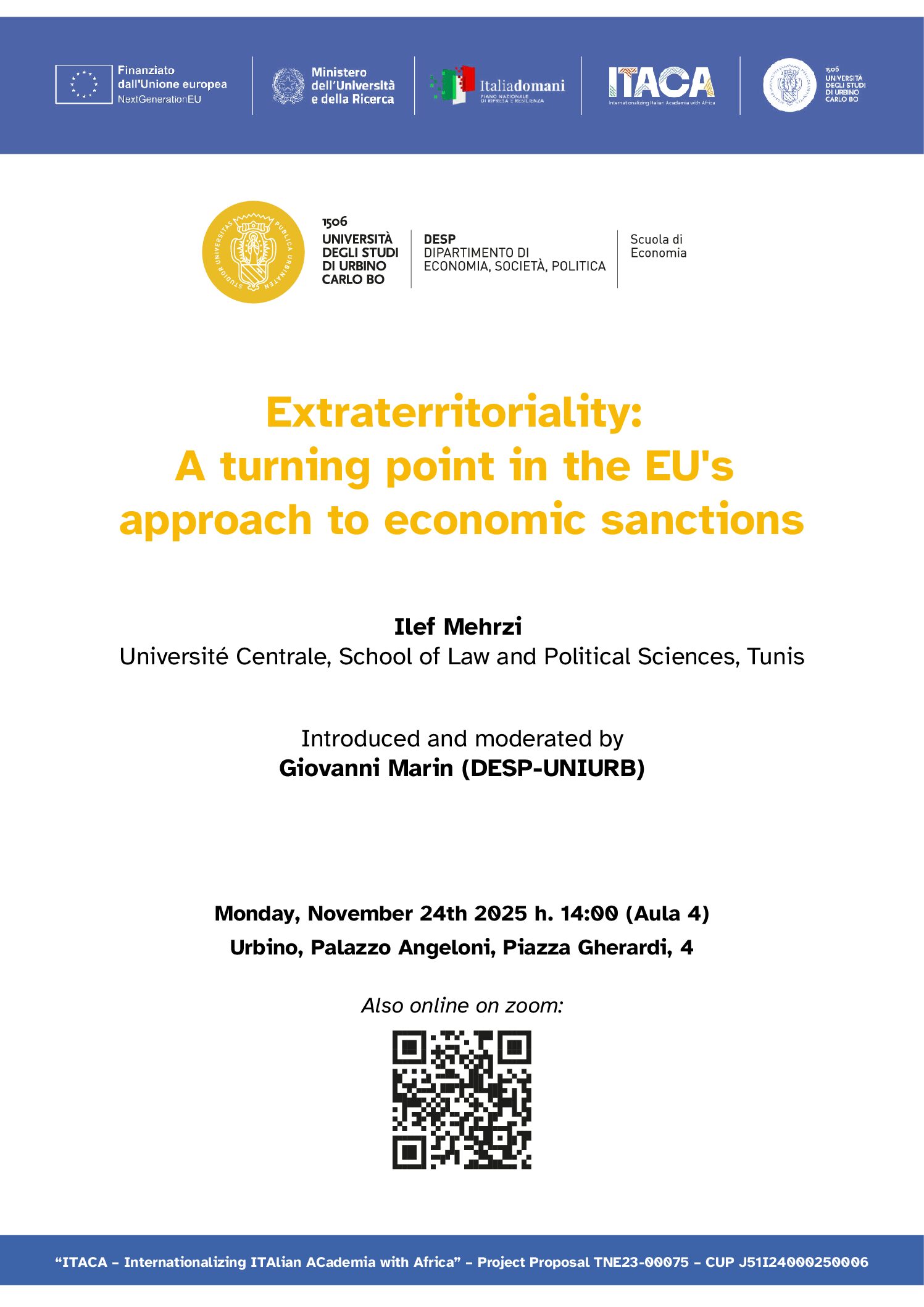
This presentation examines the growing role of extraterritoriality in the European Union’s sanctions policy, marking a significant departure from its traditional approach. Historically, the EU avoided extraterritorial measures, favoring targeted and proportionate sanctions within its jurisdiction. However, the Russian invasion of Ukraine triggered a paradigm shift: recent packages introduced “ancillary listings” and contractual cascading, compelling foreign operators to comply with EU sanctions beyond EU borders. The discussion explores the conceptual framework of extraterritoriality, contrasts EU and U.S. practices, and assesses the legal and normative implications under international law, including challenges to sovereignty and the principle of non-intervention. By analyzing case studies and enforcement mechanisms, the presentation highlights how extraterritorial sanctions reshape global economic governance and raise questions about legitimacy, effectiveness, and unintended consequences. Ultimately, it argues that this shift represents a turning point in EU foreign policy, with profound strategic and legal ramifications.
Commenti recenti