Aug 5, 2026 | ISP 3, News
The ASSET (Accounting for Sustainability, Social and Environmental Transparency) project has been featured in an official news article published by the University of Vigo, recognising the project’s contribution to advancing accounting education in response to today’s sustainability and transparency challenges.
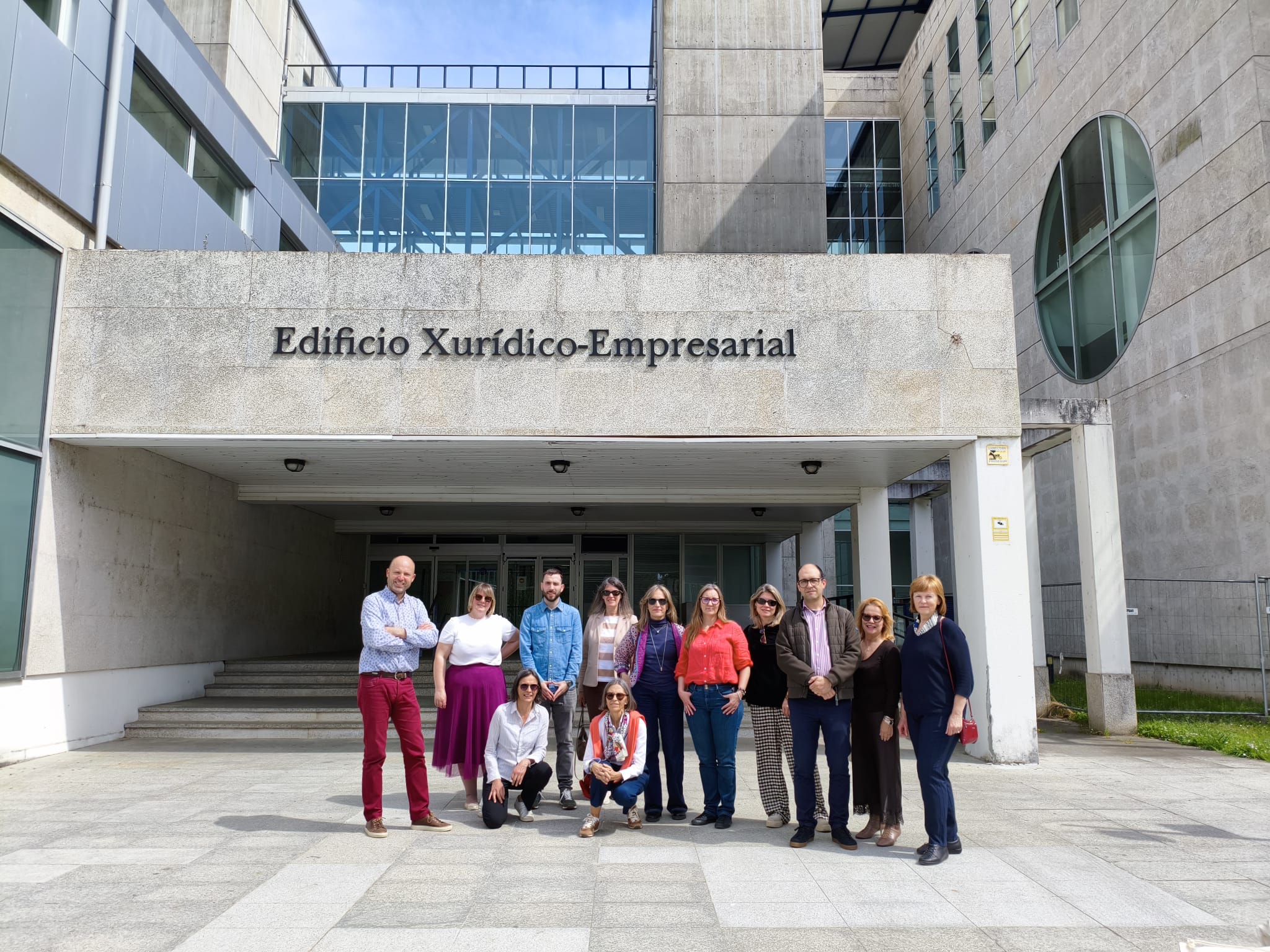
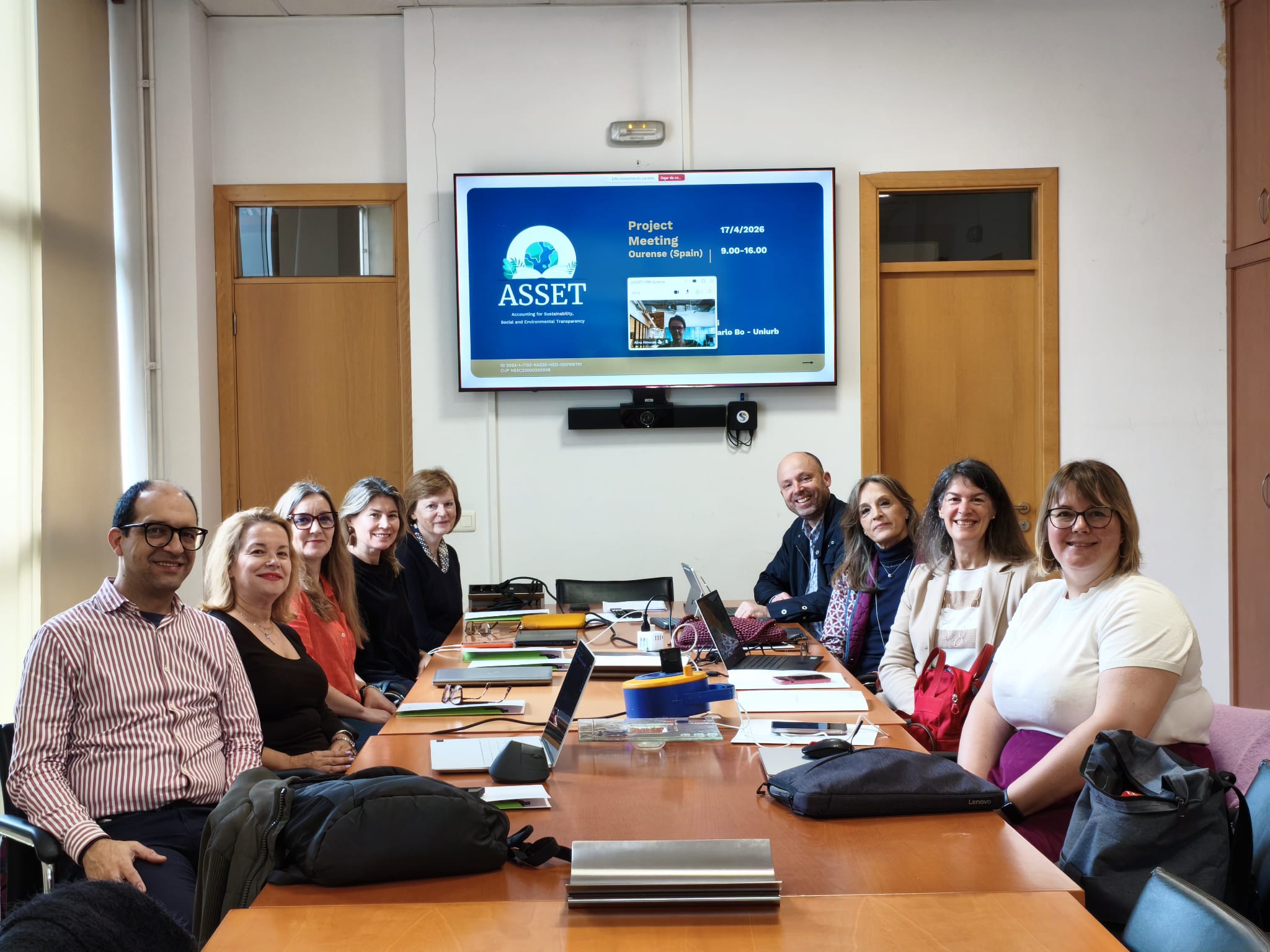
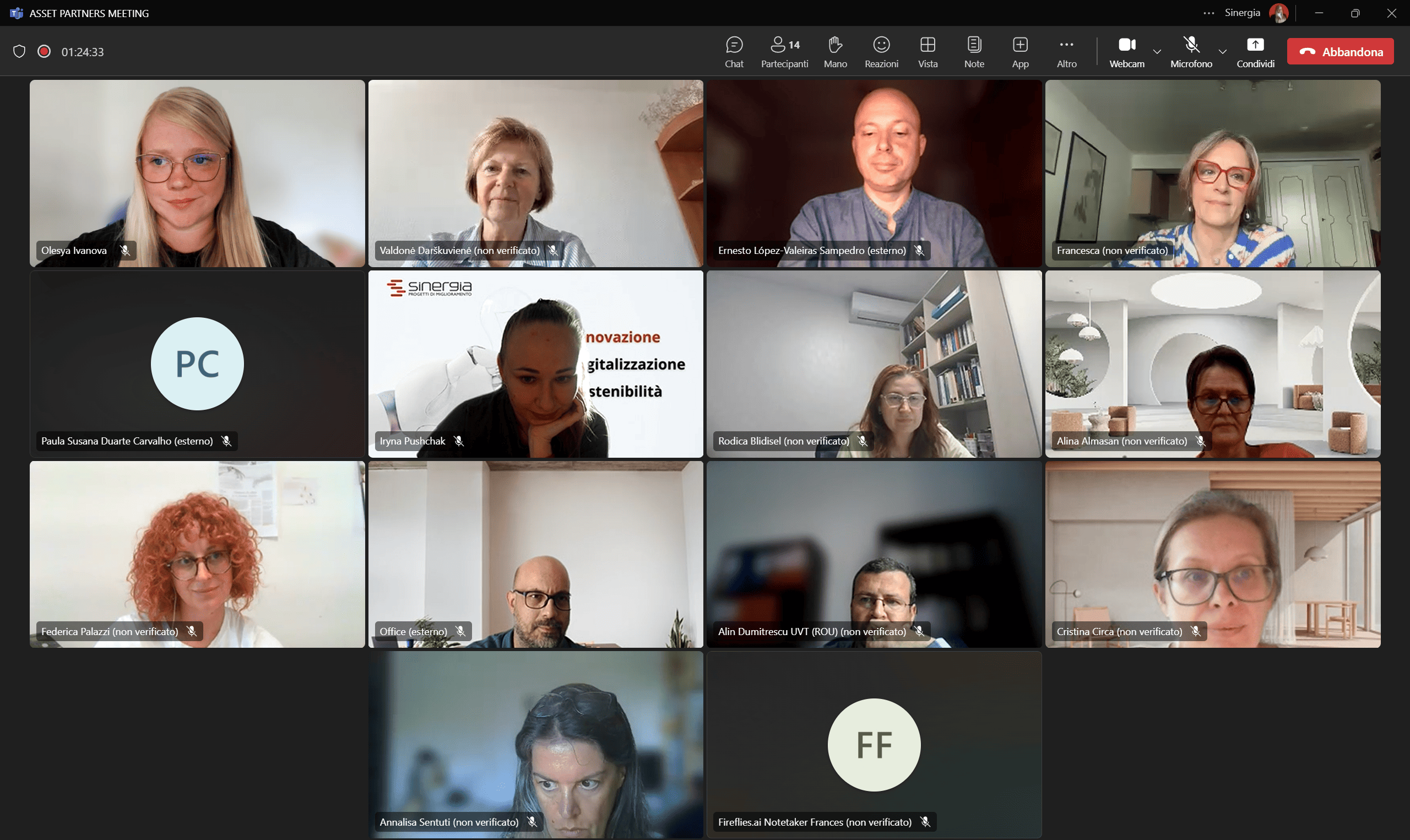
The article highlights the participation of the University of Vigo in the Erasmus+ ASSET project and reflects on the outcomes of the Transnational Project Meeting (TPM) recently held in Ourense, Spain. During the meeting, project partners reviewed the progress achieved so far and coordinated the next steps towards developing innovative educational resources that integrate sustainability into accounting education.
Co-funded by the Erasmus+ Programme, ASSET brings together eight European universities committed to modernising accounting curricula and equipping future professionals with the knowledge and skills needed to address environmental, social and governance (ESG) challenges.
Among the project’s main outputs are:
- innovative teaching materials on sustainability accounting, ESG reporting and corporate sustainability;
- an international online learning platform;
- Intensive Study Programmes that bring together students and academics from partner universities to work on real-world sustainability challenges through collaborative, case-based learning.
The next Intensive Study Programme will take place at the Johannes Kepler University Linz in September 2026, involving students and academics from across the ASSET consortium.
We are pleased to see the growing visibility of the project across partner institutions and thank the University of Vigo for promoting the initiative and its contribution to strengthening international cooperation in higher education.
Read the original article published by the University of Vigo:
https://www.uvigo.gal/universidade/comunicacion/duvi/uvigo-participa-nun-proxecto-europeo-que-busca-adaptar-formacion-contabilidade-aos-novos-retos
Oct 30, 2025 | ISP 2, News
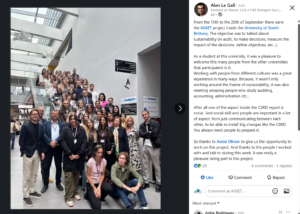
Over the past weeks, the second Intensive Study Program (ISP 2) under the ASSET (Accounting for Sustainability, Social and Environmental Transparency) initiative has drawn to a close — and what an inspiring journey it has been. For those unfamiliar, the ASSET project, coordinated by the University of Urbino and its European partners, aims to embed sustainability deeply into the curricula of accounting, auditing, and related fields.
Here are some highlights and reflections—as shared by the students—that show not only what was learned, but also why this kind of programme matters more than ever.
What is ASSET, and what ISP 2 aims for
Before diving into the feedback, a quick recap:
- The ASSET project responds to growing global demands—from regulators, markets, and society—for accountants to not only understand financial flows, but also environmental, social, and governance (ESG) dimensions.
project.uniurb.it
- Traditional vocational‑technical teaching methods are being enriched (or replaced) with more interactive, experiential, reflective pedagogies: case studies, role playing, debates, peer feedback, etc.
project.uniurb.it
- Within each ISP, students engage in modules such as ESG reporting, sustainability assurance, management accounting within sustainability, taxation + strategic decision making.
ISP 2 continued this tradition—with even more opportunities for collaboration, cross‑border learning, and hands‑on practice.
What Students tell us
Here are some of the most powerful themes from student feedback. These voices underscore what is working, and where the educational experience is transforming mindsets.
1. Sustainability is no longer just a buzzword—it’s foundational.
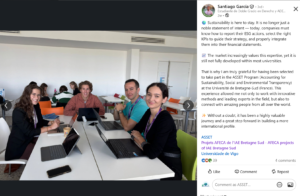
“Sustainability is here to stay. It is no longer just a noble statement of intent — today, companies must know how to report their ESG actions…” — Santiago García.
This captures the shift many students feel: sustainability is increasingly central to business, accounting, auditing—not optional, but essential.
2. Learning by doing, with global perspectives, makes the difference.
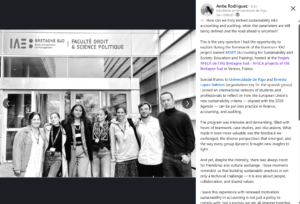
Students appreciated the diversity of peers and academic perspectives. The case studies, debates, and teamwork with people from different cultural and disciplinary backgrounds expanded not only their technical understanding but also their sense of possibilities. Antía Rodríguez says:
“…it was about teamwork, case studies, and discussions. What made it even more valuable was the feedback we exchanged, the diverse perspectives…”
3. Challenge fosters growth.
The program was “intensive and demanding” — in positive ways. Tight deadlines, difficult technical content, and the need to communicate complex ideas in English under real pressure pushed many students beyond their comfort zones. But that challenge seems to have translated into confidence, resilience, and clearer vision for their future roles.
4. Beyond technique: people, values, and collaboration matter.
It wasn’t just about learning new accounting tools or reading ESG reports. Many students emphasized how much the human element—the friendships, the cultural exchange, the shared values—added to their learning. As one put it, the project underscored that embedding sustainability isn’t only a technical task, but also a deeply social one.
5. Motivation & sense of purpose renewed.
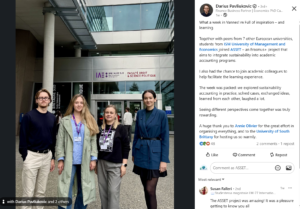
Several students expressed that completing ISP 2 left them with not just new knowledge, but renewed motivation. To pursue careers where sustainability is integrated into decision-making; to push for change; to ask bold questions. Darius Pavliukovic summed it up:
“Seeing different perspectives come together was truly rewarding…”
Why This Matters—not just for Students
- For universities: ISP 2 shows that sustainability‐oriented education, when done interactively and cross‑culturally, resonates. It’s not just about adding a module on ESG, but transforming methods and mindsets.
- For employers & society: Graduates leave not only with theoretical knowledge, but with experience in grappling with real questions—how to assure ESG information, how to integrate reporting and strategic decision-making, how to act ethically when frameworks are still evolving.
- For policy: Students’ demand for clarity (on ESG assurance standards, on sustainable reporting regulation) reflects broader societal demand for regulation, transparency, and accountability.
Moving Forward
As the ASSET project continues, here are some takeaways to carry forward:
- Keep enhancing interactivity and experiential learning—it clearly makes a difference.
- Maintain diversity of perspectives—geographic, academic, cultural—to push students to think beyond common frameworks.
- Provide space for reflection—not just on “what we learned,” but “how we see our role.”
Intensify connection with real‑world practice: stakeholders, regulation, companies.
Final Thoughts
The conclusion of ISP 2 isn’t really an end—it’s a launching pad. From the feedback of students like Santiago, Antía, Darius and others, it’s clear that programs like ASSET are helping build a new generation of accounting professionals. Professionals who understand that in the 21st century, numbers count—but the context, values, and impact behind them matter just as much.
If you’re reading this as an educator, employer, or policymaker—listen to the students. They are helping sketch the blueprint for an accounting profession rooted in sustainability, purpose, and societal contribution. And that blueprint deserves to be built.
Thanks for reading. I’d be interested to hear your thoughts: how should sustainability reshape professional education in accounting? What works well – or doesn’t – in your experience? Tell us on LinkedIn!
Nov 28, 2024 | ISP 1, News
Since December 2023, the university has been leading the ASSET – Teaching Accounting for Sustainability, Social and Environmental Transparency project, under the Erasmus+ Higher Education programs.
The first of the Intensive Study Programs (ISP) took place in Urbino from September 2–6, 2024, welcoming 70 students and faculty from partner universities across Europe, including France, Portugal, Spain, Greece, Austria, Lithuania, and Romania.

We had the pleasure of speaking with Paolo Palladino, a master’s student in Economics, Management, and Finance at the University of Urbino, about his experience in the ASSET project’s Intensive Study Program (ISP).
The ISP was not just about theoretical learning – it was about active engagement and collaboration. Paolo explained, “We worked in diverse teams of 5-8 people, changing every day, which allowed us to interact with classmates and professors from different countries and perspectives. The professors didn’t just teach theory, but also guided us closely in practical application. It was a truly immersive experience. We practice teamwork in our regular coursework, but this international interaction added a new level of effectiveness. Plus, I made some great friendships along the way!”
Paolo left the program feeling inspired and motivated to continue exploring these vital topics, and he hopes to participate again next year.
We caught up with Daniela Genito, a master’s student in Economics, Management, and Finance at the University of Urbino, to hear about her experience at the ASSET project‘s Intensive Study Program (ISP).
The ISP helped Daniela strengthen her teamwork and problem-solving abilities: “We worked with people we had never met before, communicated in English, and had to find shared solutions under tight deadlines. It was a great opportunity to improve my problem-solving skills while also deepening my theoretical knowledge. Of course, language barriers sometimes made discussions and technical topics challenging, but I saw this as a productive stress test. In my future career, I want to be able to handle different situations calmly and clearly, and I think this experience really helped me grow in that direction.”
Daniela left the program feeling more confident in her ability to work under pressure and collaborate effectively, and she’s already thinking about returning next year!
Read the full article on the University of Urbino blog to learn more about how we’re paving the way for a new generation of accountants and business leaders committed to sustainability. 🌱


Recent Comments